CubeSat Design 2.0
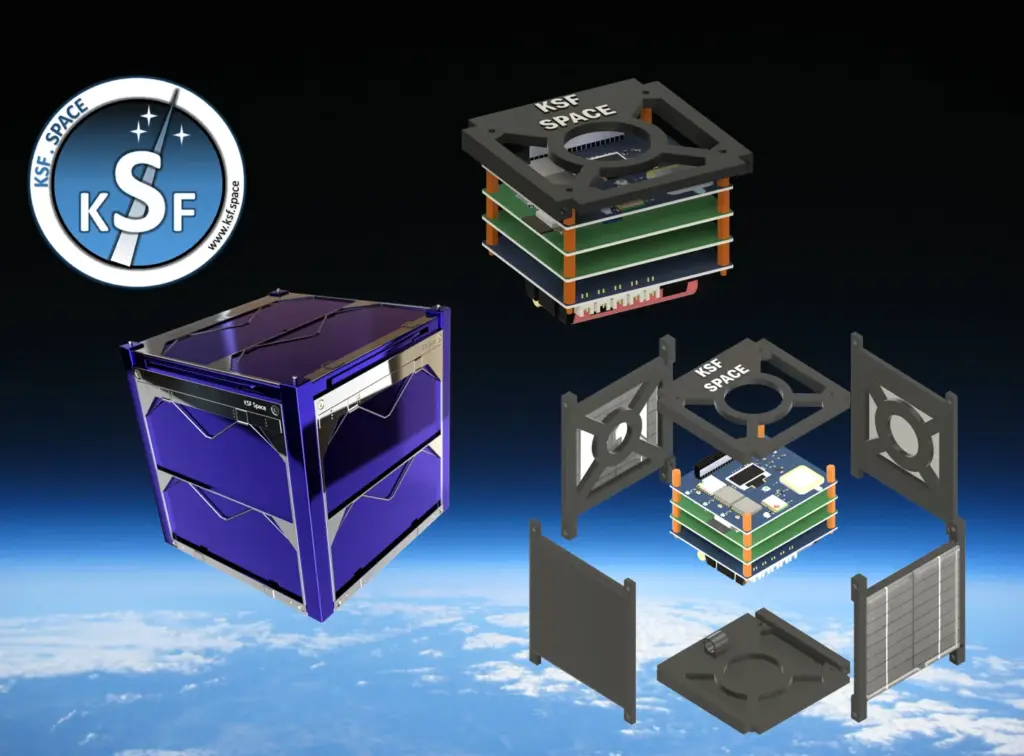
Ultimate Guide to Advanced Cubesat Design, STEM Development, and Orbital Mission Solutions
The global space sector is undergoing a profound transformation. What was once the exclusive playground of multi-billion-dollar state agencies is now open to academic institutions, private startups, and R&D enterprises. At the heart of this revolution is the Cubesat Design architecture—a standardized, scalable approach to building miniature satellites that deliver big orbital capabilities.
Whether you are aiming to launch a 1U academic demonstrator, a 3U climate research mission, or a multi-unit constellation for internet-of-things (IoT) connectivity, mastering the intricacies of a Nanosatellite Cubesat Design is key to operational success. However, moving from concept to execution requires deep specialized knowledge, flight-proven hardware, and rigorous technical training.
This is where KSF Space steps in. As a premier global leader in space technology solutions, KSF Space bridges the gap between ambitious academic projects and flight-ready missions. By offering comprehensive engineering mentorship, hands-on development kits, and world-renowned training programs, KSF Space equips universities and R&D companies to design, build, and deploy successful orbital missions
1. Fundamentals of Cubesat Design and Nanosatellite Architecture
At its core, a Cubesat is a type of Nanosatellite built using standardized units (known as "U"), where 1U measures approximately 10 cm x 10 cm x 10 cm and weighs around 1.33 kg. By chaining these units together into 2U, 3U, 6U, or larger configurations, engineers can accommodate complex scientific instruments, advanced sensors, and high-bandwidth transmitters.
Architecting a high-reliability satellite requires multi-disciplinary coordination across core subsystems:
Structure & Mechanical Frame: The primary chassis that protects delicate internal electronics during rocket launch. Materials typically include high-grade aerospace Aluminum (6061-T6 or 7075) or lightweight titanium alloys.
Electrical Power System (EPS): Solar panels, power management boards, and lithium-ion battery banks that store and deliver regulated voltage across all operational modes.
On-Board Computer (OBC): The central computational unit running flight software, managing data flow, maintaining system health, and executing telecommands.
Attitude Determination & Control System (ADCS): Reaction wheels, magnetorquers, and fine sun sensors that orient the satellite toward Earth, targets, or the sun.
Telemetry, Tracking, & Control (TT&C): Radios and antennas operating on UHF/VHF, S-band, or X-band frequencies for ground communication.
Core Subsystems Comparison
| Subsystem | Primary Function | Typical Hardware Components | Key Design Constraints |
|---|---|---|---|
| Structure Frame | Structural integrity & launch interface | Anodized Aluminum 6061-T6, PA11 polymers, Titanium | Structural rigidity, mass limit, thermal expansion |
| Electrical Power System (EPS) | Energy generation & distribution | Triple-junction solar cells, LiFePO4 batteries, PMIC | Solar surface area, thermal limits on batteries |
| Table DataOn-Board Computer (OBC) | Data processing & command management | Microcontrollers, FPGA boards, flash memory | Power consumption, radiation tolerance |
| ADCS | Pointing stability & orientation | Magnetometers, sun sensors, reaction wheels, star trackers | Torque limits, power drain, pointing accuracy |
| Communication (TT&C) | Data uplink/downlink & telemetry | Dipole antennas, UHF/VHF transceivers, S-Band transponders | RF link budget, ground station line-of-sight |
2. Navigating the Economics: Understanding Cubesat Cost and Cubesat Price Factors
One of the main reasons academic institutions and commercial startups adopt nanosatellites is affordability. However, calculating the true Cubesat cost requires looking past the basic hardware component tag to understand the entire mission lifecycle.
Breakdown of Primary Budget Categories
-
Hardware & Payload Costs: A baseline educational Cubesat kit or structural platform starts at lower budget thresholds, whereas space-qualified, radiation-hardened components for long-term orbital missions scale up depending on complexity.
-
Environmental Testing & Qualification: Satellites must pass rigorous test campaigns—such as vibration, shock, and Thermal Vacuum (TVAC) testing—to ensure they won't disintegrate during launch or fail in vacuum conditions.
-
Launch Integration & License Fees: Securing a rideshare slot on a commercial launch vehicle (like a Falcon 9 or Electron rocket) alongside administrative expenses for ITU/FCC frequency coordination forms a significant part of the overall Cubesat price.
KSF Space addresses these budgetary hurdles by providing modular, cost-efficient platforms and affordable rideshare options, making space exploration accessible to institutions with tight research grants.
3. Empowering STEM Education in Universities and Colleges
For modern universities and higher education colleges, hands-on STEM projects are critical for attracting top engineering talent and preparing students for the aerospace workforce. A student-led Nanosatellite Design project yields multidisciplinary learning opportunities spanning mechanical engineering, software development, RF physics, and project management.
KSF Space acts as an active technical partner for academic institutions, supporting STEM initiatives through:
Custom Modular Architecture: Allowing students to build and test actual flight hardware rather than relying solely on computer simulations.
Curriculum Integration: Assisting educators with structuring courses around real-world satellite development lifecycles (Phase A concept down to Phase D integration).
Intercollegiate Collaboration: Connecting emerging university space labs with established international projects to share insights, flight opportunities, and ground station resources.
4. Accelerating University STEM Projects with the Cubesat Design Kit and Cubesat Kit Solutions
Building a space mission entirely from scratch can be daunting for students and first-time researchers. Utilizing an integrated Cubesat Design kit or educational Cubesat kit significantly reduces development risks, allowing teams to focus on payload scientific goals rather than reinventing essential base infrastructure.
Advantages of Development Kits from KSF Space
Plug-and-Play Compatibility: Standardized internal PC/104 stack buses ensure seamless connections between power systems, computers, and user payloads.
Rapid Prototyping: Kits enable flat-sat bench testing early in the project timeline, reducing software and electrical integration bugs.
Flight-Proven Reliability: Hardware designs mirror space-ready standards, allowing academic teams to transition smoothly from ground prototypes to flight hardware.
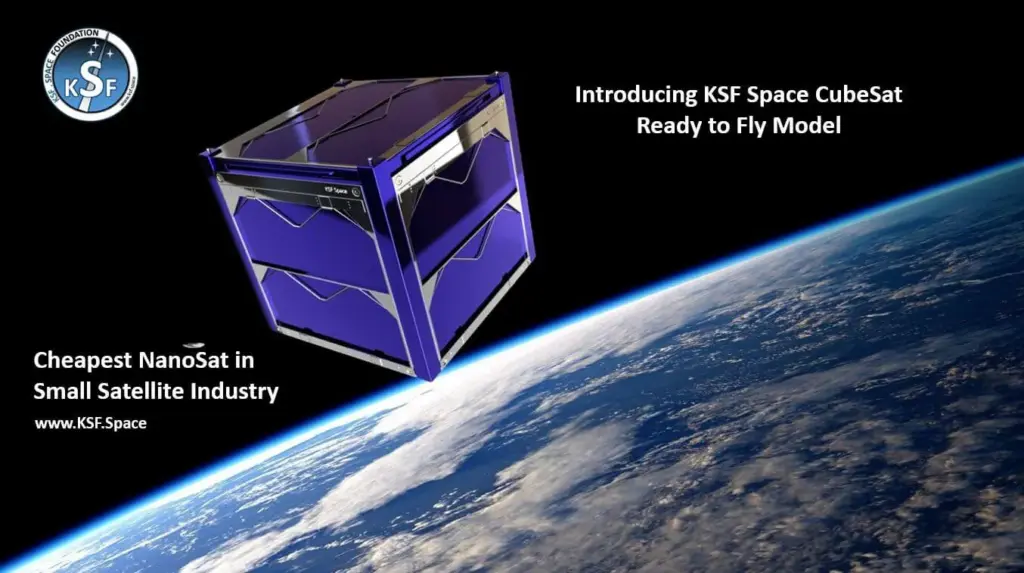
5. Professional Industry Training: Nanosatellite Engineering Professional Certificate (NEP)
Technical hardware alone cannot guarantee a successful space mission; human expertise is equally critical. To close the skill gap in small satellite development, KSF Space developed the world-renowned Nanosatellite
Engineering Professional (NEP) courses.
The NEP course curriculum gives students, academics, and R&D engineers comprehensive end-to-end training covering the entire small satellite lifecycle:
-
Phase A/B - Mission Concept & System Requirements: Defining payload parameters, orbital mechanics, link budgets, and trade-off analyses.
-
Phase C - Detailed Design & Subsystem Development: Integrating OBC, EPS, solar panels, thermal management, and RF transceivers.
-
Phase D - Assembly, Integration, and Testing (AIT): Applying industry verification standards (such as NASA GEVS) during environmental, thermal, and vibration testing.
-
Phase E/F - Launch Services & Operations: Managing rocket rideshare integrations, deployer interfaces (e.g., P-POD), frequency registrations, and ground station operations.
Completing the NEP certification equips engineers with industry-recognized credentials, giving commercial ventures and academic labs the credibility needed to secure research funding and launch approvals.
6. How KSF Space Delivers Credibility Across All Space Sectors and R&D Companies
In the aerospace market, flight heritage and institutional credibility are key. KSF Space stands out as an international hub for space science, providing support to universities, research companies, and government organizations around the world.
Why R&D Organizations Partner with KSF Space
Deep Subject-Matter Expertise: Powered by an international committee of veteran aerospace engineers, scientists, and researchers.
End-to-End Mission Guidance: Supporting projects from initial concept through structural design, payload integration, testing, and orbital launch logistics.
Affordable Access for Developing Institutions: Through dedicated initiatives like the Experimentation Opportunity Program, KSF Space enables developing institutions to participate in joint orbital experiments without exorbitant costs.
Frequently Asked Questions (FAQ)
What is the typical timeframe required to complete a Cubesat Design project?
Development timelines vary based on scope. An educational or STEM Cubesat kit can be assembled and bench-tested within 3 to 6 months. Full flight-ready missions generally take 12 to 24 months from Phase A concept design to final launch delivery.
How does KSF Space help reduce the overall Cubesat cost for universities?
KSF Space lowers cost barriers by offering modular structures, standardized development kits, joint mission rideshares, and educational discounts—enabling institutions to deploy real experiments at a fraction of standard commercial prices.
What is covered in the Nanosatellite Engineering Professional (NEP) courses?
The NEP program covers the entire lifecycle of a satellite project. Topics include orbital mechanics, link budget analysis, power budget estimation, subsystem integration, thermal management, launch deployer standards, and regulatory frequency licensing.
Can R&D companies build custom payloads using KSF Space structures?
Yes. KSF Space supplies flexible, modular frames (ranging from 1U to 24U formats) built using space-grade Aluminum and Titanium. These frameworks allow corporate R&D teams to easily integrate custom commercial sensors, communication technologies, or scientific payloads.
Launch Your Space Mission Today
The barrier to orbit has never been lower. Whether you are expanding your university's aerospace engineering department, building a student STEM project, or developing innovative technologies for an R&D company, KSF Space provides the technical expertise, training platforms, and flight hardware needed to bring your mission to life.
Take the first step toward launching your orbital mission today. Contact the technical team at KSF Space to discuss custom hardware platforms, university partnerships, or upcoming course schedules.
Official Website: www.ksf.space
Direct Contact Email: [email protected]
As featured on

KSF Space Foundation is a USA non profit organization registered in Delaware #5605031 offers support in numerous areas,
Working hours
Mon-Fri: 9 AM – 5 PM
Saturday: 9 AM – 5 PM
Sunday: closed
Quick Link